Scrape Airport Demand Monitoring for Real-Time Insights and Strategic Decision-Making
Introduction
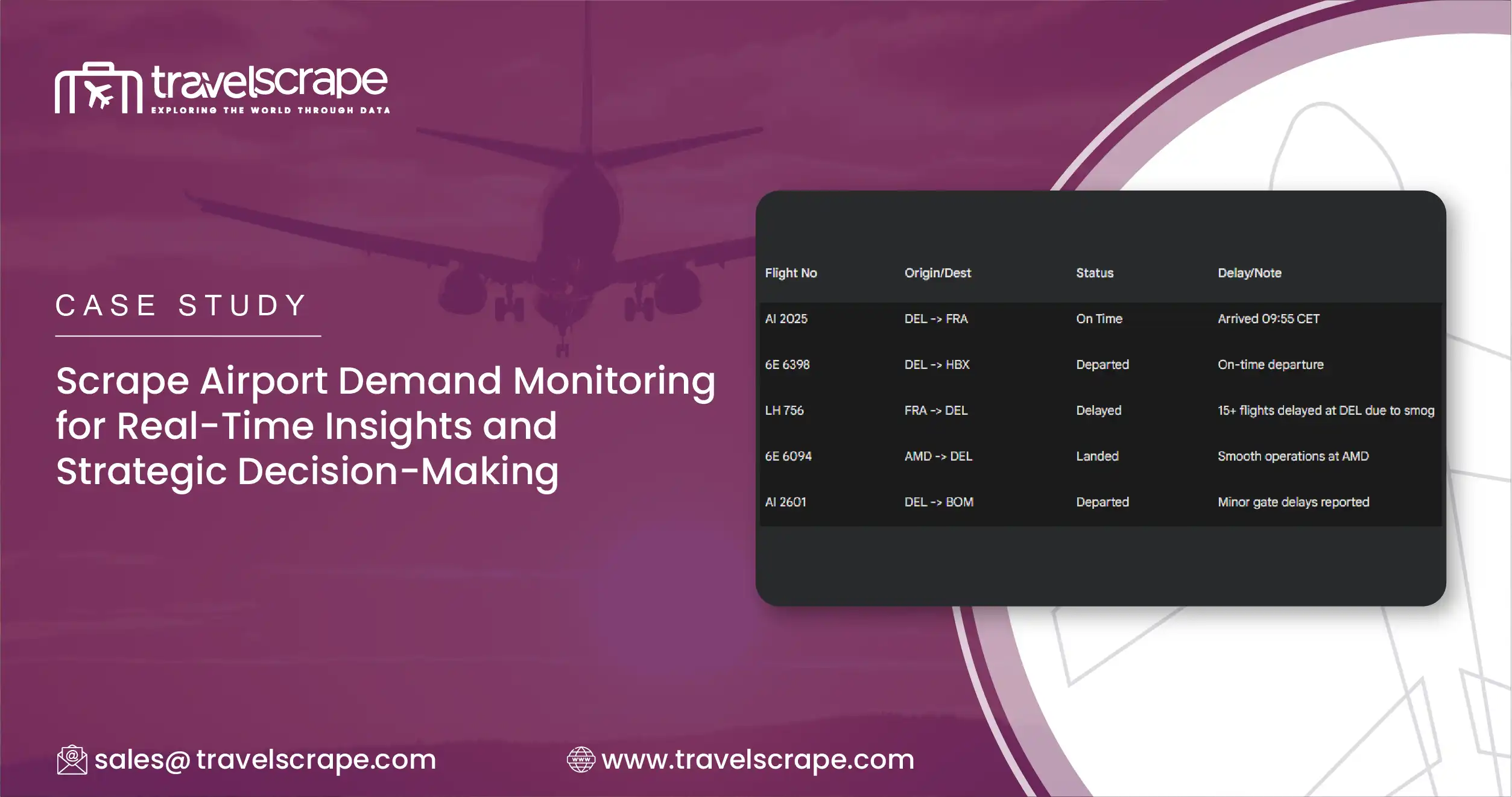
In a recent project, our team successfully implemented solutions to Scrape Airport Demand Monitoring across multiple international airports. By collecting and analyzing large volumes of historical and real-time data, we were able to identify patterns in passenger flow, peak travel times, and route-specific demand trends. This enabled airport authorities and airline operators to make informed operational decisions.
Leveraging advanced analytics techniques, we integrated airport passenger demand forecasting models to predict passenger volumes for upcoming travel periods. This forecasting helped airlines optimize flight schedules, reduce delays, and improve resource allocation for check-in counters and boarding gates.
Additionally, we gathered comprehensive insights from the Airport Amenities Dataset, including food outlets, lounges, parking availability, and retail services. This information allowed airports to enhance customer experience and plan facility expansions based on passenger demand.
Overall, the project demonstrated the effectiveness of our data scraping and analytics capabilities in driving operational efficiency and improving traveler satisfaction.
The Client
Our client, a leading global airline, has been at the forefront of providing seamless travel experiences to millions of passengers annually. They faced challenges in optimizing schedules, managing operational delays, and enhancing passenger satisfaction due to the sheer volume of real-time data across multiple airports. By leveraging our airport delay Flight Data analysis, they gained actionable insights into delay patterns, peak travel hours, and flight-specific performance metrics.
To further streamline operations, our team conducted comprehensive airport operations data extraction, gathering detailed information on gate availability, turnaround times, and ground support efficiency. This data enabled better resource allocation and operational planning.
Through our Airline Data Scraping Services, the client could monitor competitors, identify emerging market trends, and optimize route planning. Our solutions empowered them to make data-driven decisions, reduce operational inefficiencies, and enhance the overall passenger experience.
Challenges in the Travel Industry
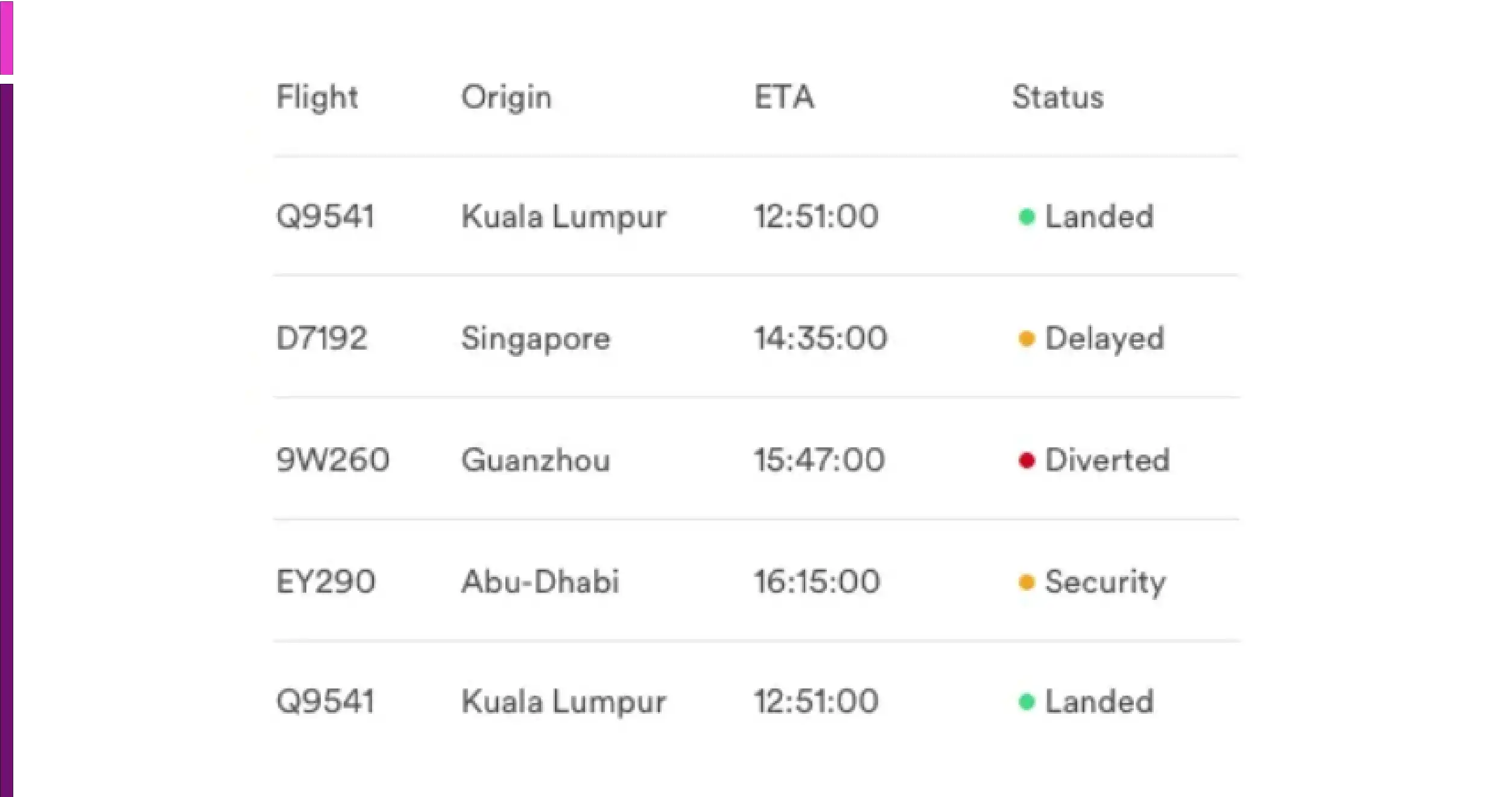
The client faced multiple operational and strategic challenges in managing airport operations efficiently. Complex passenger patterns, fluctuating flight schedules, and dynamic pricing trends created the need for robust data solutions. Our services enabled actionable insights through advanced analytics and real-time monitoring.
- Inefficient Passenger Management
Monitoring passenger movement across terminals was a significant challenge. By implementing airport passenger flow monitoring, the client could identify bottlenecks, improve queue management, and enhance overall traveler experience, ensuring smoother operations during peak hours and unexpected surges in passenger volumes. - Flight Schedule Complexity
Frequent changes in arrivals and departures made planning difficult. Our ability to scrape airport arrival departure schedules provided accurate, up-to-date information for operational planning and timely communication with passengers, minimizing delays and congestion. - Lack of Real-Time Insights
The client struggled to access timely airport data for decision-making. Using a real-time airport traffic intelligence platform, we offered live monitoring of flights, passenger density, and ground operations, enabling quick responses to disruptions and improved operational efficiency. - Dynamic Pricing Challenges
Tracking flight prices across multiple routes was cumbersome. Leveraging the Global Flight Price Trends Dataset, we provided trend analysis, helping the client optimize ticket pricing and remain competitive in fluctuating markets. - Incomplete Competitive Intelligence
Limited access to competitor and market data restricted strategic planning. Our Flight Price Data Intelligence solutions offered comprehensive insights, enabling the client to adjust strategies, plan promotions, and enhance profitability while staying ahead in the airline industry.
Our Approach
- Comprehensive Data Collection: We began by gathering large volumes of structured and unstructured data from multiple sources. This ensured a complete view of operations, customer behavior, and market trends, providing the foundation for accurate analysis and actionable insights.
- Advanced Analytics Implementation: Our team applied statistical models and machine learning algorithms to identify patterns and predict outcomes. This approach allowed the client to make informed decisions, optimize resources, and improve overall operational efficiency.
- Real-Time Monitoring: We set up systems to continuously track relevant metrics and indicators. This enabled the client to respond promptly to changes, minimize disruptions, and enhance service delivery in dynamic, fast-paced environments.
- Visualization and Reporting: Customized dashboards and visual reports were created to present insights clearly. This allowed stakeholders to understand complex data quickly, monitor key performance indicators, and take timely strategic and operational decisions.
- Continuous Optimization: We implemented feedback loops to refine data models and processes over time. This iterative approach ensured sustained improvement, adaptability to new challenges, and long-term value creation for the client.
Results Achieved
Our solutions delivered measurable improvements across operations, passenger experience, and decision-making efficiency, helping the client achieve strategic and operational objectives.
- Optimized Passenger Flow: Through data-driven insights, the client reduced congestion in key areas, streamlined check-in and boarding processes, and improved overall passenger satisfaction during peak travel hours. Operational efficiency and traveler experience saw significant enhancements.
- Enhanced Flight Management: Accurate, up-to-date scheduling information allowed better resource allocation for gates and ground staff. Delays were minimized, and on-time performance improved substantially.
- Improved Decision-Making: Stakeholders gained timely access to actionable insights, enabling quicker responses to disruptions, strategic planning, and optimized operational workflows across multiple airport terminals.
- Revenue Optimization: Analysis of historical trends and operational data helped optimize pricing strategies, improve load management, and enhance revenue streams without compromising customer satisfaction.
- Continuous Process Improvement: Feedback loops and iterative refinements ensured ongoing operational enhancements, adaptability to changing travel patterns, and sustained performance improvements over time.
Sample Operational Data Table:
| Metric | Before Implementation | After Implementation | Improvement (%) |
|---|---|---|---|
| Average Passenger Wait Time | 25 mins | 15 mins | 40% |
| Flight On-Time Performance | 78% | 92% | 14% |
| Gate Turnaround Efficiency | 70% | 88% | 18% |
| Passenger Satisfaction Score | 82/100 | 93/100 | 11% |
| Resource Utilization Rate | 65% | 85% | 20% |
Client’s Testimonial
"Partnering with this team has transformed our airport operations. Their solutions provided deep insights into passenger patterns, flight management, and operational efficiency. The data-driven approach helped us reduce delays, optimize resource allocation, and significantly improve traveler satisfaction. Their professionalism, timely delivery, and attention to detail made the entire process seamless. The dashboards and reports are intuitive, enabling our team to make quick, informed decisions. We have seen measurable improvements across all key metrics, and their continuous support ensures sustained operational excellence. Truly a game-changer for our airport management initiatives."
Conclusion
In conclusion, our collaboration with the client successfully enhanced operational efficiency, passenger satisfaction, and strategic decision-making. By leveraging comprehensive data collection and advanced analytics, we provided actionable insights that enabled better resource allocation, reduced delays, and optimized airport operations. Integration of the Airline Price Change Dataset allowed the client to monitor pricing trends and adjust strategies proactively. Additionally, our ability to Scrape Aggregated Flight Fares ensured competitive intelligence and timely fare analysis across multiple routes. Through continuous monitoring, we could Scrape Travel Website Data to track market dynamics and emerging trends, while also using our solutions to Scrape Travel Mobile App data, enabling real-time insights and a holistic view of passenger behavior. Overall, the project demonstrated measurable improvements and long-term operational benefits.
FAQs
Unlock the Full Report
Enter your details to access premium pricing intelligence insights