How Does Cruise Voyage Data Scraping API Help Monitor Port Schedules and Ship Locations?
Introduction
The cruise tourism industry has evolved into a highly dynamic, data-driven ecosystem where pricing, route optimization, port scheduling, and passenger demand forecasting change rapidly. Travel agencies, OTAs, cruise aggregators, and maritime analytics firms now rely heavily on structured datasets to make informed decisions. This is where Cruise Voyage Data Scraping API plays a transformative role.
Modern businesses leverage Cruise Data Scraping Services to extract structured information from cruise line websites, booking platforms, and maritime tracking portals. With advanced automation, organizations can perform Cruise Line Voyage Data Scrape operations to gather itineraries, departure dates, route maps, cabin pricing, onboard amenities, and ship deployment strategies at scale.
In this comprehensive guide, we explore how cruise voyage data scraping APIs help businesses extract lines, dates, itineraries, port schedules, ship locations, and media assets while ensuring compliance, accuracy, and scalability.
Why Cruise Voyage Data Matters?
The global cruise industry spans luxury liners, expedition cruises, river voyages, and regional travel circuits. Each voyage includes multiple structured data points:
- Cruise Line Name
- Ship Name
- Voyage ID
- Departure & Arrival Dates
- Ports of Call
- Cabin Categories & Pricing
- Promotions & Discounts
- Route Maps
- Deck Plans
- Real-Time Ship Locations
- Media Assets (Images, Videos, Brochures)
Without automated extraction, collecting this information manually is time-consuming and inefficient. APIs built for cruise data scraping solve this challenge by delivering real-time, structured datasets ready for analytics.
Core Components of a Cruise Voyage Data Scraping API
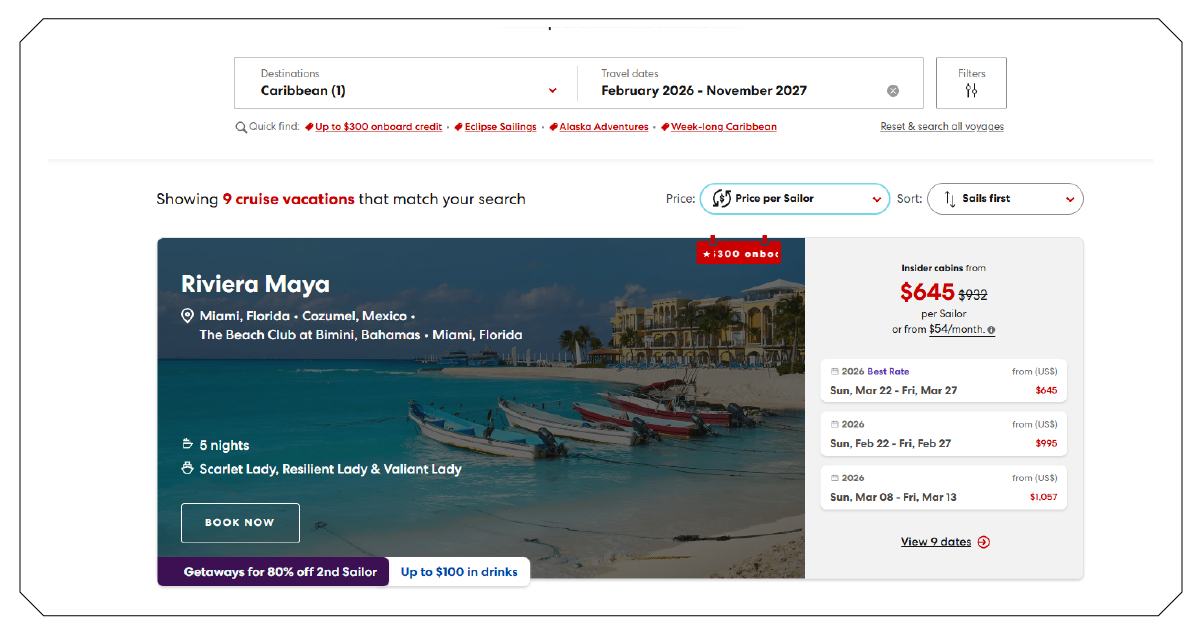
A robust cruise voyage scraping API typically captures the following data streams:
1. Cruise Lines & Fleet Data
- Ship registry
- Fleet size
- Ship capacity
- Renovation schedules
- Onboard features
2. Voyage Schedules
- Departure city
- Arrival port
- Duration (3, 5, 7, 14+ nights)
- Seasonal availability
- Special event cruises
3. Itinerary Data
- Daily port stops
- Sea days
- Excursion details
- Docking times
4. Port Schedules
- Arrival and departure times
- Terminal information
- Berth allocations
- Turnaround days
5. Pricing & Cabin Data
- Interior, Oceanview, Balcony, Suite pricing
- Dynamic fare fluctuations
- Early bird discounts
- Last-minute deals
- Add-on packages
6. Media Assets
- Ship images
- Cabin images
- Deck plans
- Promotional videos
- Brochure PDFs
By combining these datasets, businesses can create competitive dashboards and travel intelligence platforms.
Building a Global Cruise Route Intelligence System
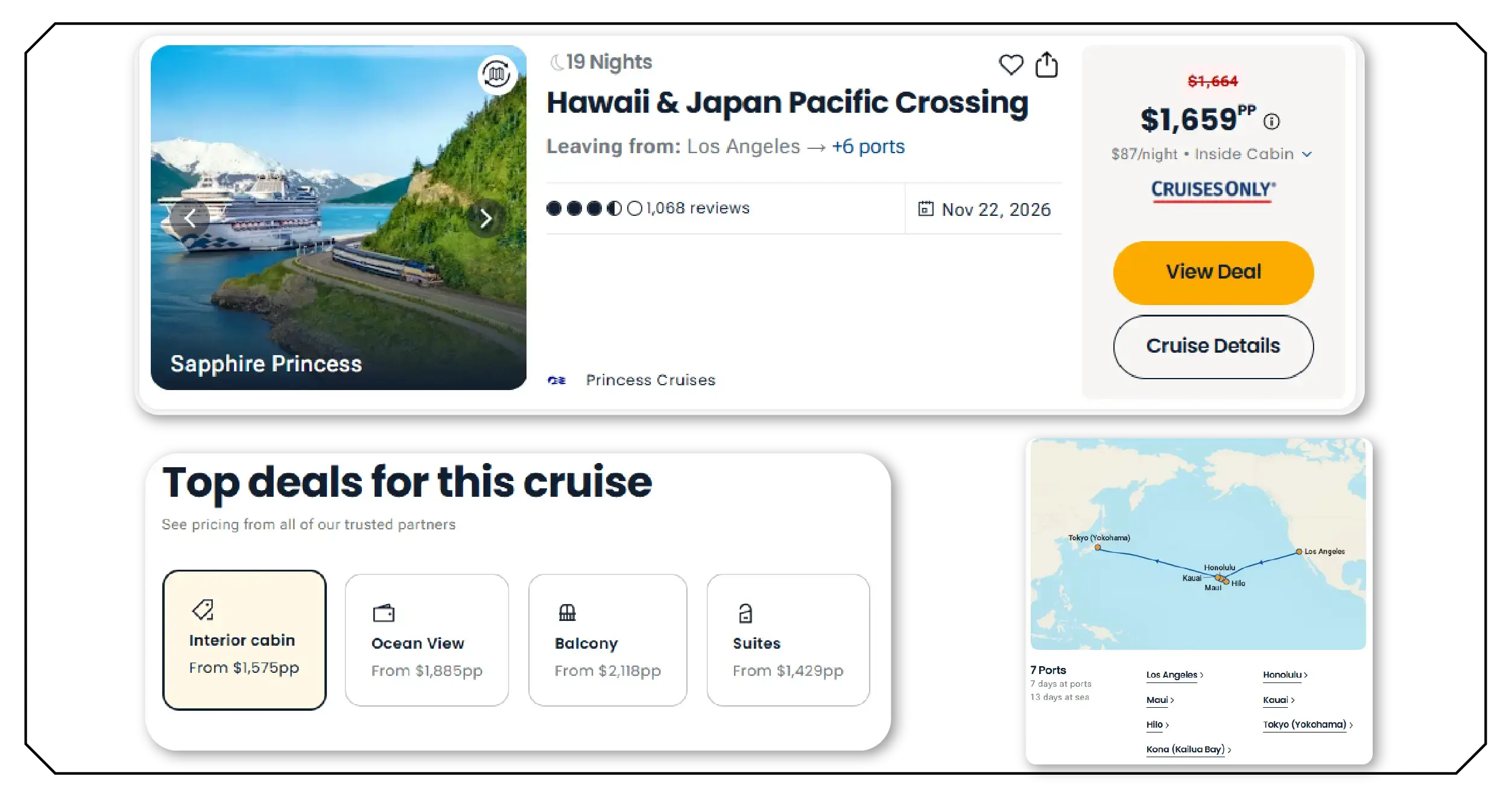
One of the most valuable outputs of cruise scraping solutions is a comprehensive Global Cruise Route Dataset. This dataset includes:
- Popular cruise corridors (Caribbean, Mediterranean, Alaska, Asia-Pacific)
- Seasonal route rotations
- Emerging ports
- High-demand destinations
- Port frequency analysis
Travel companies can use this dataset to forecast demand, identify trending routes, and optimize package offerings.
Extracting Itineraries at Scale
Cruise itineraries define the customer journey. Using method to Extract Cruise Voyage Itineraries data API, businesses can automate the collection of:
- Daily schedule breakdowns
- Shore excursion availability
- Overnight port stays
- Embarkation & disembarkation rules
- Visa requirements
Structured itinerary extraction enables travel platforms to display detailed day-wise schedules instantly, improving user engagement and booking conversions.
Cruise Pricing Intelligence for Competitive Advantage
Dynamic pricing is one of the most complex aspects of cruise commerce. Prices vary based on:
- Cabin category
- Sailing date
- Demand fluctuations
- Occupancy rates
- Seasonal offers
- Loyalty programs
- Monitor competitor fare movements
- Track historical pricing patterns
- Identify peak booking windows
- Offer optimized package bundles
- Implement AI-driven fare predictions
- Ship arrival times
- Departure windows
- Terminal assignments
- Berth details
- Traffic congestion analysis
- Compare cruise options
- Display real-time availability
- Provide dynamic pricing updates
- Evaluate route performance
- Study demand cycles
- Track fleet deployment strategies
- Monitor ship traffic
- Analyze port congestion
- Forecast supply chain impacts
- Track vessel movements
- Assess route risk exposure
- Monitor seasonal disruptions
- Build forecasting models
- Analyze booking patterns
- Identify emerging destinations
- Live vessel positioning
- Route deviation alerts
- Weather impact analysis
- Emergency monitoring
- Operational transparency
- High-resolution ship imagery
- Cabin walkthrough videos
- Deck plan PDFs
- Promotional banners
- 360-degree virtual tours
- JSON
- CSV
- XML
- RESTful API endpoints
- Scheduled batch feeds
- Webhook integrations
- Respect website terms of service
- Follow rate-limiting practices
- Avoid server overload
- Ensure GDPR compliance
- Maintain data privacy standards
- Automation at Scale – Extract thousands of voyages instantly.
- Real-Time Updates – Access live fare and schedule changes.
- Competitive Monitoring – Track rival cruise lines effectively.
- Structured Intelligence – Convert unstructured HTML into clean datasets.
- Enhanced Booking Experience – Deliver detailed voyage insights to customers.
- Data-Driven Decisions – Enable AI-powered forecasting models.
- AI-powered anomaly detection
- Predictive demand forecasting
- Dynamic pricing simulation
- Weather-integrated route optimization
- Sentiment analysis from reviews
By leveraging Cruise Pricing Intelligence, businesses can:
This data empowers travel aggregators to stay competitive in a fluctuating market.
Port Schedule & Maritime Movement Data
Cruise port schedules are critical for logistics providers, port authorities, and travel planners. A Cruise Voyage Port Schedule Data Scrape API enables automated extraction of:
Accurate port scheduling improves operational planning and enhances passenger experiences.
Similarly, businesses can Scrape Cruise Route And Price for Travel App development, allowing real-time route comparison and fare visualization for customers.
Another advanced solution is the Scrape Cruise Voyage Port Schedule Data API, which supports large-scale data feeds for maritime analytics platforms.
Applications Across Industries
Travel Aggregators
Cruise Market Analysts
Maritime Logistics Firms
Insurance & Risk Management
AI & Predictive Analytics Firms
Real-Time Ship Location Tracking
Cruise tracking has become a major requirement for analytics and safety monitoring platforms. Integrating AIS (Automatic Identification System) feeds with scraping APIs enables:
Such integrations significantly enhance cruise analytics capabilities.
Media Asset Extraction & Enrichment
Cruise lines invest heavily in visual marketing assets. Scraping APIs can extract:
These assets improve OTA listings and enhance user trust.
Data Structuring & Delivery Formats
A professional cruise scraping API delivers data in:
This ensures seamless integration with booking engines, CRM systems, BI dashboards, and AI models.
Compliance & Ethical Considerations
While scraping cruise data, businesses must:
Enterprise-grade APIs use rotating proxies, intelligent parsers, and anti-block detection systems to maintain high data accuracy without violating compliance norms.
Benefits of Using a Cruise Voyage Data Scraping API
Future of Cruise Data Intelligence
As the cruise industry becomes increasingly digital, AI and predictive analytics will depend heavily on structured maritime datasets. Automated scraping APIs will evolve to include:
Companies investing in cruise data intelligence today will lead tomorrow’s maritime tourism analytics revolution.
How Travel Scrape Can Help You?
1. Real-Time Cruise Market Monitoring
Our data scraping services continuously collect updated cruise schedules, pricing changes, port timings, and route adjustments. This enables you to monitor competitors, respond instantly to market fluctuations, and provide travelers with accurate, real-time voyage information.
2. Comprehensive Itinerary & Route Intelligence
We extract structured itinerary details, destination sequences, sea days, and excursion information. This helps you analyze popular routes, identify emerging cruise destinations, and build data-driven travel packages tailored to seasonal demand trends.
3. Advanced Pricing & Revenue Optimization
Our solutions gather cabin-level pricing, promotional offers, and historical fare data. With actionable pricing intelligence, you can forecast demand patterns, optimize margins, adjust package rates dynamically, and strengthen your competitive positioning.
4. Automated Port Schedule & Fleet Tracking
We capture port arrival and departure schedules along with vessel movement data. This supports logistics planning, reduces operational uncertainty, enhances maritime visibility, and improves customer communication regarding cruise timing changes.
5. Structured Data for Seamless Integration
Our scraping services deliver clean, standardized datasets via API, JSON, or CSV formats. This ensures smooth integration with booking engines, BI dashboards, analytics tools, and AI systems for scalable decision-making and business growth.
Conclusion
In a rapidly evolving maritime tourism market, automated data extraction is no longer optional—it is essential. Advanced scraping frameworks allow businesses to extract schedules, pricing, itineraries, routes, and ship movements at scale. By integrating solutions such as Real-Time Cruise Voyage Location Tracking API, companies can gain visibility into vessel movements and operational transparency.
Moreover, structured datasets like Cruise Voyage Route & Destination Data Scrape empower travel platforms to analyze global corridors and optimize route recommendations. Comprehensive resources such as the Cruise Line Itinerary Dataset provide granular voyage-level insights, enabling smarter forecasting, pricing strategies, and customer engagement models.
A robust Cruise Voyage Data Scraping API solution ultimately transforms raw maritime data into actionable business intelligence—fueling innovation, automation, and sustainable growth across the cruise travel ecosystem.
Ready to elevate your travel business with cutting-edge data insights? Scrape Aggregated Flight Fares to identify competitive rates and optimize your revenue strategies efficiently. Discover emerging opportunities with tools to Extract Travel Website Data, leveraging comprehensive data to forecast market shifts and enhance your service offerings. Real-Time Travel App Data Scraping Services helps stay ahead of competitors, gaining instant insights into bookings, promotions, and customer behavior across multiple platforms. Get in touch with Travel Scrape today to explore how our end-to-end data solutions can uncover new revenue streams, enhance your offerings, and strengthen your competitive edge in the travel market.
Unlock the Full Report
Enter your details to access premium pricing intelligence insights