Comparative Travel Market Insights: Accommodation and Spending in Singapore & Philippines
Introduction
This report provides a detailed study of the travel and tourism industries in Singapore and the Philippines, offering Comparative Travel Market Insights that help stakeholders understand market dynamics and emerging opportunities. The analysis focuses on visitor trends, spending patterns, accommodation preferences, and seasonal fluctuations, revealing key differences between the two countries. Singapore’s market is driven by high-value international travelers, business tourism, and premium leisure segments, while the Philippines relies heavily on domestic tourism with growing international arrivals. Leveraging Travel Data Intelligence Solutions, operators and policymakers can identify demand patterns, optimize offerings, and develop targeted strategies. By integrating Singapore Travel Market Intelligence, the report highlights differences in demographics, traveler preferences, and revenue streams, enabling data-driven decision-making and strategic planning across both markets.
Overview of Visitor Arrivals
Singapore has consistently attracted international travelers, with arrivals increasing steadily each year. High-value segments such as business travelers, MICE (Meetings, Incentives, Conferences, and Exhibitions), and luxury tourists dominate the market. Visitor growth is primarily driven by excellent connectivity, visa facilitation, world-class infrastructure, and global events. In contrast, the Philippines sees fewer international arrivals but relies heavily on domestic travelers who contribute the bulk of tourism revenue. Factors such as natural attractions, affordable accommodations, and cultural tourism drive this domestic dominance.
| Metric | Singapore | Philippines |
|---|---|---|
| International Visitor Arrivals (Millions) | 16.5 | 5.95 |
| Tourism Revenue (USD/Billion) | 22.4 | 14.5 |
| Visitor Composition | Predominantly international | Predominantly domestic |
| Top Source Markets | China, Indonesia, India | South Korea, USA, Japan |
Singapore’s focus on international arrivals translates into higher per-visitor spending, while the Philippines’ domestic reliance offers volume-based revenue growth and resilience against global travel disruptions. Monitoring these metrics through Travel & Tourism Datasets allows stakeholders to make informed decisions about marketing, investment, and operational strategies.
Accommodation and Spending Patterns
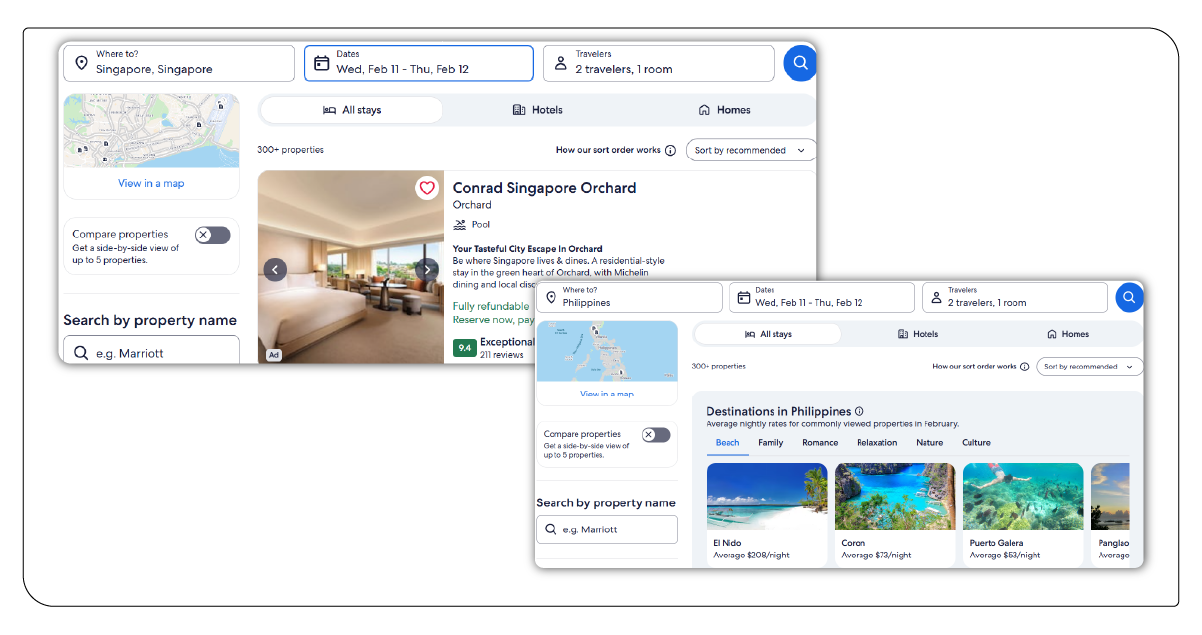
Accommodation and visitor spending provide a clear picture of market positioning. In Singapore, most tourists prefer premium hotels, serviced apartments, and luxury resorts, leading to higher average daily rates and visitor expenditure. Travelers often engage in business or high-end leisure activities, contributing significantly to overall tourism receipts.
The Philippines, however, attracts a diverse demographic, including budget travelers, mid-range tourists, and domestic families. Visitors prioritize affordability and experiences such as beach resorts, cultural excursions, and adventure tourism. The difference in accommodation preference reflects the market segmentation and economic strategies of the two countries.
| Indicator | Singapore | Philippines |
|---|---|---|
| Average Daily Hotel Rate (USD) | 210 | 95 |
| Average Visitor Spend per Day (USD) | 220 | 120 |
| Average Stay Duration (Days) | 2.4 | 3.1 |
| Hotel Occupancy (%) | 81.8 | 70.5 |
The insights drawn from these patterns assist in designing packages, promotions, and pricing strategies. For instance, premium packages in Singapore can be tailored for short-term high-spending visitors, while the Philippines can focus on extended stay packages, highlighting experiences like island hopping or eco-tourism excursions.
Popular Destinations and Experiences
Singapore’s urbanized environment offers a mix of cultural, business, and leisure attractions. Iconic landmarks, luxury shopping districts, world-class dining, and entertainment venues appeal to international travelers seeking convenience and premium experiences. Events such as conventions, exhibitions, and sports tournaments create additional tourist inflows.
The Philippines, on the other hand, is celebrated for natural beauty, including pristine beaches, diving sites, and mountainous regions. Cultural heritage towns, local festivals, and eco-tourism experiences attract both domestic and international visitors seeking adventure and authentic experiences.
| Destination Type | Singapore | Philippines |
|---|---|---|
| Urban & Cultural Sites | 65% | 30% |
| Beaches & Islands | 10% | 50% |
| Adventure & Nature | 10% | 15% |
| Events & Entertainment | 15% | 5% |
Analyzing these visitor patterns allows operators to optimize itineraries, promote specific regions, and design experience-driven packages. Integrating Travel Review Data Intelligence helps understand visitor preferences in real-time, improving satisfaction and repeat visitation rates.
Visitor Feedback and Sentiment
Understanding traveler sentiment is critical for enhancing experiences and improving service quality. By analyzing reviews, social media posts, and surveys through Customer Feedback Sentiment Dataset, stakeholders can pinpoint areas of improvement, identify popular attractions, and track shifts in visitor expectations.
Key observations include:
- Singapore visitors prioritize seamless transportation, cleanliness, safety, and luxury experiences. Positive reviews often focus on convenience, accessibility, and modern facilities.
- Philippines travelers appreciate value-for-money services, natural landscapes, and cultural immersion. Feedback indicates that adventure experiences, beaches, and local hospitality are major satisfaction drivers.
- Negative sentiment in both markets highlights service gaps such as overcrowding in Singapore or inconsistent facility maintenance in Philippine resorts.
Leveraging such data allows tourism boards, hotels, and operators to implement changes rapidly, tailor promotional campaigns, and enhance customer engagement, increasing overall competitiveness.
Seasonal Patterns and Trends
Tourism in both countries exhibits significant seasonal variation. Singapore experiences peaks during international festivals, holidays, and major global events. Visitor arrivals are highest during periods of conventions, exhibitions, and major sporting events. The Philippines has its peak domestic travel during summer months, school holidays, and festival seasons, while international arrivals show slight increases during global holiday periods.
| Month | Singapore Arrivals (Thousands) | Philippines Arrivals (Thousands) |
|---|---|---|
| January | 1,200 | 450 |
| March | 1,350 | 500 |
| June | 1,600 | 750 |
| September | 1,400 | 680 |
| December | 1,800 | 900 |
Understanding these seasonal trends allows operators to manage pricing, staffing, and marketing campaigns effectively. Combined with insights from comparison availability Travel data Extracting, businesses can anticipate peak demand periods and develop strategies for off-peak optimization.
Opportunities for Market Growth
Analysis reveals multiple opportunities for both countries:
- Singapore can enhance experiential tourism for high-value travelers, including curated luxury packages and event-based promotions.
- The Philippines can strengthen eco-tourism, adventure, and wellness tourism to attract international visitors while supporting domestic demand.
- Utilizing Philippines Travel Market data Insights enables identifying underserved regions and potential growth markets.
- Incorporating Singapore and Philippines travel trend analysis can guide marketing campaigns, pricing strategies, and product offerings.
- Combining traveler sentiment, booking patterns, and expenditure data supports predictive modeling, helping operators tailor services and increase ROI.
Strategic Recommendations
To maximize growth:
- Singapore should continue investing in digital infrastructure, MICE events, and high-end tourism experiences.
- The Philippines should improve domestic infrastructure, enhance online booking systems, and expand international connectivity.
- Both markets should use insights from Travel & Tourism Datasets and analytics to refine operations, target high-value travelers, and anticipate market trends.
- Operators can integrate sentiment and review data into service improvements to boost satisfaction and loyalty.
- Predictive analytics and dynamic pricing strategies can optimize revenue across peak and off-peak seasons.
Conclusion
Singapore and the Philippines demonstrate distinct tourism profiles. Singapore benefits from international, high-spending visitors, with strong demand in business and premium leisure segments. The Philippines relies largely on domestic tourism, while international arrivals are gradually increasing. Accessing Web scraped travel data Singapore provides real-time insights to support business decisions and operational planning. Utilizing Scraping travel data Philippines allows stakeholders to monitor trends, benchmark performance, and identify opportunities. Investing in Custom Travel Data Solutions helps operators segment markets, forecast demand, and deliver personalized offerings. These strategies enable sustained growth, optimized operations, and a superior travel experience for visitors in both countries.
Ready to elevate your travel business with cutting-edge data insights? Scrape Aggregated Flight Fares to identify competitive rates and optimize your revenue strategies efficiently. Discover emerging opportunities with tools to Extract Travel Website Data, leveraging comprehensive data to forecast market shifts and enhance your service offerings. Real-Time Travel App Data Scraping Services helps stay ahead of competitors, gaining instant insights into bookings, promotions, and customer behavior across multiple platforms. Get in touch with Travel Scrape today to explore how our end-to-end data solutions can uncover new revenue streams, enhance your offerings, and strengthen your competitive edge in the travel market.
Unlock the Full Report
Enter your details to access premium pricing intelligence insights