City-wise Cab Pricing Datasets and Their Impact on Ride-Hailing Strategies
Introduction
In today’s rapidly evolving urban mobility landscape, understanding City-wise cab pricing datasets is essential for businesses, policymakers, and researchers who aim to map the dynamics of ride costs across different urban centers. Whether you’re analyzing fluctuations in trip costs or identifying pricing strategies of major providers, structured and accurate datasets are the backbone of actionable insights. Additionally, Car Rental Data Scraping Services play a pivotal role in collecting pricing information efficiently. Similarly, Car Rental App Data Scraping helps standardize data for analysis, enabling deeper insights and data-driven decision-making.
The overarching goal of this report is to explore, evaluate, and contextualize the various elements of city-level transportation pricing data, bringing together trends, formats, analytical approaches, and practical challenges. This includes insights into real-time collection, historical trends, and cross-city comparisons in mobility pricing.
Why City-Wise Cab Pricing Data Matters?
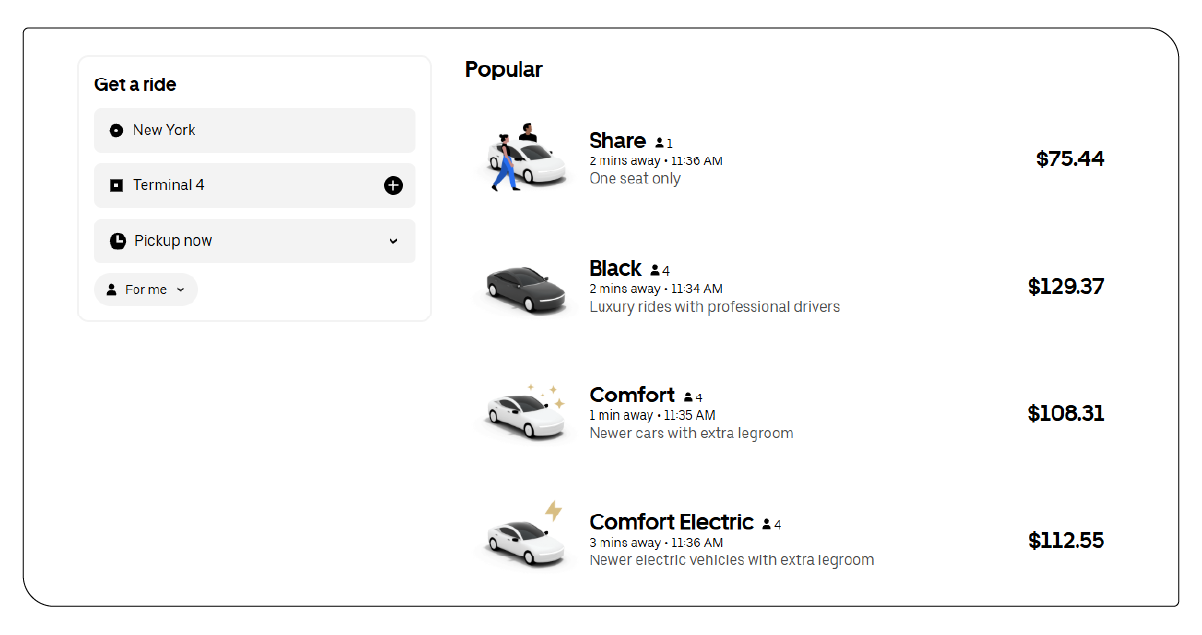
Understanding pricing at the city level is crucial for several reasons:
- It allows competitors in the ride-hailing and rental market to benchmark pricing strategies.
- Local governments and urban planners can monitor affordability and accessibility.
- Mobility analysts can detect patterns related to peak demand, special events, or subsidies.
Such insights are not possible without structured, reliable, and granular datasets from sources such as aggregator apps, third-party portals, and APIs that facilitate Real-Time Car Rental Data Scraping API to catch moment-to-moment changes.
Types of Pricing Data in Urban Mobility
There are several key types of pricing datasets that researchers and businesses commonly encounter:
- Ride-hailing pricing dataset – Detailed records of ride prices for services like Uber, Lyft, and local competitors.
- Car Rental Price Trends Dataset – Historical pricing over time for rental vehicles across cities.
- City-level mobility pricing data – A broad category covering all transport modalities and price points within a city.
- Car Rental Location Dataset – Geospatial and availability data tied to pricing structures.
- Car price intelligence data – Highly enriched data used for pricing strategy and competitive benchmarking.
Each dataset serves specific analytical use cases—from forecasting future pricing behavior to understanding elasticity of demand.
Sample City-Wise Cab Pricing Metrics
| City | Base Fare (USD) | Per KM Rate (USD) | Peak Fare Multiplier | Average Trip Cost (USD) |
|---|---|---|---|---|
| New York | 2.50 | 1.80 | 1.5× | 18.75 |
| London | 3.00 | 2.10 | 1.6× | 20.40 |
| Mumbai | 1.20 | 0.65 | 1.4× | 10.50 |
| Tokyo | 2.80 | 1.95 | 1.7× | 22.30 |
This table showcases typical pricing elements such as base fare, per-km rate, and peak multipliers, offering a snapshot of how cab prices vary across major urban centers.
Methods for Collecting Pricing Data
There are multiple technical approaches to building comprehensive cab pricing datasets:
1) Manual Data Collection
Traditionally impractical at scale due to frequent price changes.
2) Automated Scraping
This is where Car Rental Data Scraping Services and Car Rental App Data Scraping shine—automating extraction from multiple sources (web portals, mobile apps, dashboards) while normalizing formats.
3) API Integration
Third-party and proprietary APIs allow direct access to pricing feeds. With Real-Time Car Rental Data Scraping API integrations, analysts can stream pricing updates and fuel live dashboards.
Automated approaches demand attention to data quality issues such as duplication, API throttling, and inconsistent city naming conventions.
Data Collection Methods Comparison
| Method | Speed | Scalability | Cost | Data Freshness |
|---|---|---|---|---|
| Manual Data Entry | Low | Low | Low | Low |
| Automated Web Scraping | High | Medium | Medium | Medium |
| API-Based Data Acquisition | Very High | High | High | High |
This comparison illustrates why most enterprise users prefer API-driven and automated scraping solutions—balancing freshness, scalability, and overall cost.
Standard Fields Seen in Cab Pricing Datasets
A robust pricing dataset usually includes the following fields:
| Field Name | Description |
|---|---|
| City | Name of the city where pricing was collected |
| Service Provider | Cab or rental brand (e.g., Uber, Heetch, inDrive) |
| Base Fare | Starting cost to initiate the ride (USD/Local) |
| Per KM / Mile Rate | Distance-based charges applied during the trip |
| Time Rate | Time-based charges (per minute/hour) |
| Peak Fare Multiplier | Surge or dynamic pricing factor (e.g., 1.5x) |
| Timestamp | Exact date and time of pricing capture |
These fields form the backbone for subsequent analyses, comparisons, and predictions.
Use Cases for City Pricing Data
City cab pricing datasets serve several modern business and research needs:
- Competitive Pricing Analysis: Companies benchmark rates against competitors to optimize fare models.
- Market Entry Strategy: New entrants evaluate price levels across cities to determine profitability thresholds.
- Demand Forecasting: Pricing signals often correlate with demand—datasets help predict peak periods.
- Urban Planning: Governments monitor ride affordability as part of transit accessibility initiatives.
These use cases highlight the versatility of structured Car Rental Location Dataset for strategic and operational decisions.
Challenges in City-Wise Pricing Data Aggregation
Despite their utility, these datasets face challenges:
- Dynamic Pricing: Frequent fare fluctuations complicate historical comparisons.
- Data Quality Issues: Inconsistencies in city coding, missing values, and duplicated records.
- API Limitations: Rate limits and access restrictions hinder real-time data capture.
To address these, modern solutions often combine API feeds with scheduled scraping and robust ETL (Extract, Transform, Load) processes.
Global Price Trends Across Cities
One of the most fascinating insights from city-wise pricing data is the variation in affordability across regions:
- In Asia (e.g., Mumbai), pricing tends to be significantly lower than in North America or Europe.
- Developed markets often integrate dynamic pricing more aggressively during peak hours.
- Cities with strong public transit alternatives may show suppressed cab pricing due to competitive pressure.
These findings assist multinational mobility companies in tailoring localized pricing models.
Simulated Example — 7-Day Price Trend (USD)
| City | Day 1 Avg | Day 4 Avg | Day 7 Avg | % Change Week |
|---|---|---|---|---|
| New York | 18.0 | 19.2 | 21.0 | +16.7% |
| London | 20.4 | 21.0 | 21.9 | +7.4% |
| Mumbai | 9.8 | 10.2 | 10.7 | +9.2% |
| Tokyo | 21.8 | 22.1 | 22.8 | +4.6% |
This simulated price trend highlights the usually upward movement of average fares during peak travel periods, special events, or weekend demand spikes.
Tools and Technologies for Data Work
To extract, structure, and analyze Car Rental Price Trends Dataset at scale, common technologies include:
- Python: For web scraping and ETL pipelines.
- Scrapy & BeautifulSoup: Libraries for structured data extraction.
- API Clients: For connecting with ride-hailing and rental APIs.
- SQL & NoSQL Databases: For storage and analytical querying.
- Visualization Tools: Tableau, Power BI, and Python plotting libraries for insights.
Combining these tools supports end-to-end data workflows that feed predictive analytics and reporting dashboards.
Data Quality Best Practices
To ensure accuracy and usability of city-wise pricing datasets:
- Deduplication: Remove repeated entries across sources.
- Normalization: Standardize units, currency, and city identifiers.
- Timestamping: Ensure accurate time capture for temporal analyses.
- Error Flagging: Mark anomalous or incomplete records for review.
These steps enhance reliability and confidence in downstream analysis.
Conclusion
In conclusion, the analysis and utilization of Ride-hailing pricing dataset provide vital perspectives for enterprises and researchers alike. From benchmarking to market entry strategies, pricing data transforms raw numbers into actionable strategy.
As ride costs continue to evolve with consumer behavior and economic conditions, advanced analytics based on precise, timely data remain indispensable. In this context, Ride-hailing Car fare data analysis helps uncover pricing elasticity and competitive dynamics at granular levels.
Moreover, Extracting Car Pricing data through modern pipelines supported by real-time feeds and structured datasets enables forward-looking insights into mobility patterns. Ultimately, integrating structured datasets with intelligent tools unlocks next-generation mobility insights for stakeholders—fueling smarter decisions and innovations in urban transportation. Lastly, Car Rental Data Intelligence empowers strategic planning and operational excellence in high-velocity markets.
Ready to elevate your travel business with cutting-edge data insights? Scrape Aggregated Flight Fares to identify competitive rates and optimize your revenue strategies efficiently. Discover emerging opportunities with tools to Extract Travel Website Data, leveraging comprehensive data to forecast market shifts and enhance your service offerings. Real-Time Travel App Data Scraping Services helps stay ahead of competitors, gaining instant insights into bookings, promotions, and customer behavior across multiple platforms. Get in touch with Travel Scrape today to explore how our end-to-end data solutions can uncover new revenue streams, enhance your offerings, and strengthen your competitive edge in the travel market.
Unlock the Full Report
Enter your details to access premium pricing intelligence insights