How Can Bus Ticket Price Analysis India Help You Predict Seasonal Fare Surges?
Introduction
In India’s rapidly growing travel ecosystem, fare fluctuations in the intercity bus market have become more dynamic than ever. To understand these unpredictable patterns, travelers, travel-tech companies, and operators increasingly depend on data-driven insights. This is where bus ticket price analysis India becomes essential for unveiling deep patterns and identifying the causes behind fare variations. With digital infrastructure expanding and online travel bookings rising, the need for structured datasets and Tour & Travel Package Data Scraping solutions becomes critical. Moreover, unexpected route-level disruptions and seasonal anomalies make bus Market Disruption analysis India vital for forecasting how prices will behave under different conditions.
Why Bus Prices Fluctuate in India’s Intercity Travel Market?
Bus fares across India often shift due to weather conditions, festival rush, special events, and changes in supply-demand balance. Unlike air travel or railways, the bus ecosystem is extremely flexible—operators can increase or reduce fleets, diversify routes, or modify their pricing in real time. This results in constant price variability, making predictive analysis important for both travelers and operators.
Understanding these fluctuations helps OTAs, pricing analysts, and travel companies deploy strategies based on historic demand cues. With the support of accurate bus seat demand forecasting India, platforms can identify route-specific highs and lows, optimize user recommendations, and analyze long-term travel trends. Stakeholders also rely on Travel & Tourism Datasets to understand seasonal patterns, competition strength, and year-on-year changes on popular routes.
Weather Conditions: A Major Influencer of Bus Fare Patterns
India’s diverse weather conditions—from heavy monsoons in the west to dense winter fog in the north—directly influence bus prices.
Monsoons
During heavy rains, bus availability on several state and private routes decreases due to operational risks. Road blockages, landslides, slippery terrains, and slower travel times all contribute to reduced supply, pushing fares upward. In some regions, operators temporarily suspend operations, further tightening availability and increasing peak pricing.
Winters
Seasonal fog in northern states causes major delays in early morning and late-night buses. Operators either cancel trips or shift schedules, reducing the number of operational buses. Fares often increase as passengers compete for fewer reliable time slots.
Heatwaves
During extreme summer temperatures, demand for AC sleeper buses increases significantly. Limited AC capacity on many routes leads to higher pricing.
To handle such fluctuations, analysts increasingly use methods that Scrape weather impact on bus ticket prices, allowing platforms to provide alerts, dynamic suggestions, and better combinations of timing, pricing, and comfort options.
Festival Travel: The Biggest Trigger for Bus Fare Surges
India’s festivals are synonymous with massive domestic movement. Whether it is Diwali, Pongal, Onam, Durga Puja, Christmas, or Eid, intercity travel demand shoots up across the country.
This festival season bus fare surge India occurs primarily because millions of people travel simultaneously, putting extreme pressure on bus capacity. Even short-distance routes experience significant fare jumps. Operators often increase prices due to heightened demand and quick ticket sell-outs.
Festival surges are predictable—historical datasets show clear recurring patterns every year. This enables travel platforms to:
- Suggest early booking
- Offer fare-drop alerts
- Highlight high-demand corridors
- Provide festival-specific travel recommendations
Accurate forecasting helps both customers and operators prepare in advance for the inevitable seasonal surge.
City Events & Their Impact on Intercity Bus Fares
City-specific events—concerts, sports tournaments, marathons, political rallies, exhibitions, academic examinations, fairs, and cultural festivals—have a major impact on bus fares.
When cities like Mumbai, Delhi, Bengaluru, Kolkata, Pune, Chennai, or Hyderabad host large events, the demand for intercity buses increases sharply. People travel from nearby towns and neighboring states to attend these gatherings, pushing ticket prices upward.
Examples include:
- Cricket matches attracting fans from nearby regions
- College admission seasons increasing student travel
- Tech fairs, Auto Expos, and Film Festivals boosting short-term travel
- Marathon events drawing participants from across India
Travel-tech companies rely on Travel Data Intelligence Solutions to merge event calendars, route demand data, and historical price patterns so they can forecast the impact of such events more accurately.
How Data Scraping Helps Decode Bus Price Behaviour?
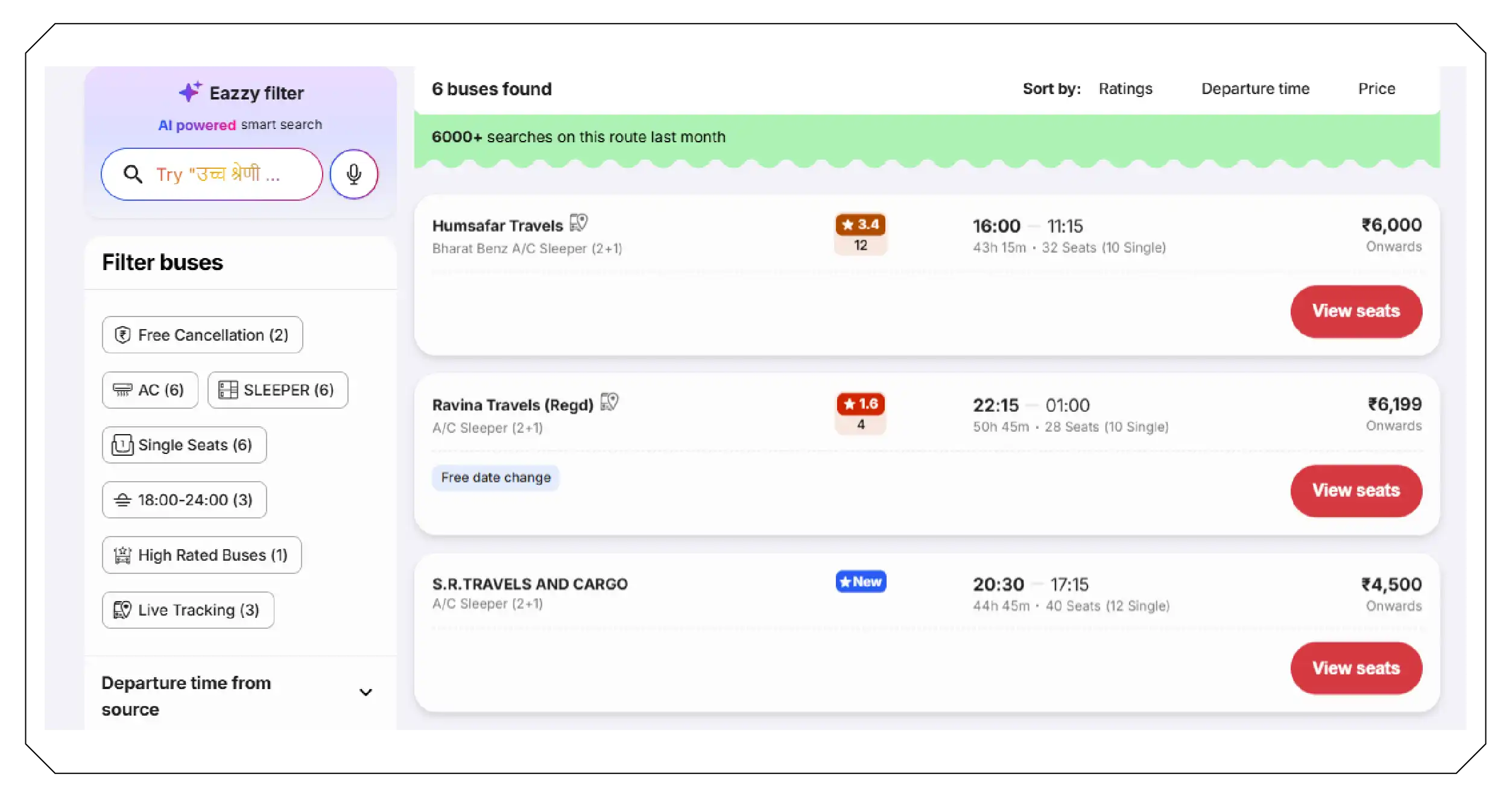
Modern travel platforms depend heavily on scraping technologies to monitor price changes, understand trends, and predict future fare movement. Automated crawlers extract thousands of data points across routes, timings, operators, amenities, and ticket categories.
Data scraping supports deep analysis by highlighting:
- Seasonal highs and lows
- Operator-based fare strategies
- Weekend vs weekday pricing gaps
- Climate-linked disruptions
- Festival-based surges
- Event-driven demand waves
Beyond historical datasets, real-time extraction tools provide instant updates on sudden fare changes, cancellations, or seat availability spikes.
Why Understanding Fare Fluctuation Matters?
1. For Travel Operators
Operators can plan their fleet distribution better by knowing when demand will surge. Adjusting seat capacity, offering alternate routes, and optimizing departure times become easier with detailed analysis.
2. For OTAs & Digital Aggregators
Platforms can recommend the best booking windows, highlight routes with potential price drops, and improve customer satisfaction. They can also design competitive pricing campaigns using historical demand signals.
3. For Travelers
Passengers benefit the most from such insights, as they learn when to book, what influences pricing, and how to find budget-friendly travel options during heavy rush seasons.
Technology’s Growing Role in Price Forecasting
AI-driven prediction models, data scraping tools, and machine learning systems are transforming India’s bus industry. Future bus pricing systems will rely heavily on algorithmic forecasting that unites weather predictions, festival calendars, and event datasets.
These advanced systems combine historical trends with live data signals to produce highly accurate demand predictions. They also help identify patterns such as:
- Price elasticity during peak periods
- Route-wise competition levels
- Operator-wise pricing strategies
- Seasonal occupancy behavior
Such predictive capabilities help operators reduce losses and maximize revenue while offering transparency to passengers.
How Travel Scrape Can Help You?
1. Real-Time Market Intelligence
Our advanced data scraping services deliver accurate, real-time insights on travel and pricing, helping you understand market shifts, forecast demand, optimize strategies, and stay ahead in fast-changing, competitive environments.
2. Large-Scale Structured Data Extraction
We extract massive, structured datasets from multiple platforms, giving your business deep intelligence on fares, availability, customer behavior, weather impacts, and seasonal surges to support stronger, data-driven decisions.
3. Continuous Price and Trend Monitoring
Our automated scraping tools track ongoing price fluctuations, detect anomalies, predict disruptions, and reveal evolving trends, improving your planning efficiency across travel, logistics, e-commerce, and service-based industries.
4. Custom APIs and Tailored Solutions
We provide fully customized scraping solutions, flexible APIs, and detailed dashboards that align with your business goals, supporting analytics, forecasting, competitor tracking, product enhancement, and customer experience improvement.
5. Reliable, Scalable & Compliant Data Systems
Our robust data scraping ecosystem ensures reliable, scalable, and compliant extraction, giving you consistent access to quality datasets that fuel innovation, maximize profitability, and strengthen strategic decision-making.
Conclusion
India’s intercity bus travel landscape is rapidly transforming, with pricing influenced by shifting demand, seasonal events, and unpredictable disruptions. To navigate these complex patterns, travel platforms and operators now depend heavily on real-time Seat bus pricing monitoring India for accurate, instant insights. With data-driven ecosystems expanding, businesses can use web scraping bus Market price in India to analyze fare changes, predict demand spikes, and optimize pricing strategies. By integrating intelligent automation and advanced analytics, companies gain clearer visibility into market behavior. Ultimately, adopting scalable Custom Travel Data Solutions helps brands make smarter decisions, enhance user experiences, and build more efficient, future-ready travel systems across India’s growing bus mobility network.
Ready to elevate your travel business with cutting-edge data insights? Scrape Aggregated Flight Fares to identify competitive rates and optimize your revenue strategies efficiently. Discover emerging opportunities with tools to Extract Travel Website Data, leveraging comprehensive data to forecast market shifts and enhance your service offerings. Real-Time Travel App Data Scraping Services helps stay ahead of competitors, gaining instant insights into bookings, promotions, and customer behavior across multiple platforms. Get in touch with Travel Scrape today to explore how our end-to-end data solutions can uncover new revenue streams, enhance your offerings, and strengthen your competitive edge in the travel market.
Unlock the Full Report
Enter your details to access premium pricing intelligence insights