Air India flight Data scraping in India Driving Real-Time Aviation Intelligence
Introduction
Airline operations and travel agencies often struggle with fragmented schedule information, fare fluctuations, and limited visibility into seat availability. One of our clients, a leading travel analytics firm, faced challenges in planning competitive pricing strategies and managing bookings efficiently. To solve this, we implemented Air India flight Data scraping in India, automating the collection of flight timings, seat availability, pricing tiers, and route data across all domestic and select international destinations.
Using our solution, the client could extract Air India flight schedules Data at regular intervals, ensuring access to accurate, up-to-date information for fare comparisons, route optimization, and customer recommendations. The scraped datasets were structured and centralized, supporting dynamic dashboards and predictive analytics for flight demand and pricing strategies.
Through Air India Flight Data Scraping Services, the client achieved enhanced operational efficiency, improved revenue management, and reduced manual workload. Real-time insights empowered them to respond proactively to schedule changes, optimize booking strategies, and deliver better customer experiences across multiple travel channels.
The Client
The client is a leading travel analytics and booking optimization company operating across India’s domestic and international aviation markets. They specialize in delivering actionable insights for travel agencies, airline partners, and online booking platforms, enabling smarter pricing decisions, route planning, and customer engagement strategies. Their main challenge was the lack of structured, real-time data on Air India flights, which limited their ability to monitor fares, track schedule changes, and respond proactively to market dynamics.
To address this, they relied on our Air India flight booking data extract, which automated the collection of flight schedules, seat availability, and fare patterns across multiple routes. By leveraging Web scraping Air India flight Price Trends, the client gained access to centralized, up-to-date information that improved demand forecasting and competitive analysis. With our Airline Data Scraping Services, they enhanced operational efficiency, optimized revenue strategies, and delivered a superior booking experience for their customers, while significantly reducing manual effort and errors.
Challenges in The Travel Industry
The client faced significant hurdles in tracking Air India schedules and fares across multiple routes. Manual collection methods, fragmented datasets, and delayed insights limited accurate pricing strategies, forecasting, and route optimization, reducing operational efficiency and competitive decision-making speed.
- Limited Access to Live Route Information: Tracking Air India flight availability and operational routes manually was time-consuming and error-prone. Lack of automated pipelines hindered accurate fleet and schedule optimization, requiring access to real-time Air India flight Route data for proactive operational planning.
- Inefficient Fare Monitoring Processes: Monitoring frequent fare fluctuations across multiple routes and classes was labor-intensive. Manual methods delayed insights, making strategic pricing decisions reactive. They required streamlined processes through Air India flight price monitoring in India for accurate, timely fare analysis.
- Fragmented Historical Fare Insights: The client lacked a unified dataset consolidating previous flight prices, limiting trend analysis and competitive benchmarking. Access to Air India flight fare dataset India would enable predictive fare modeling and better revenue strategy planning.
- Need for International Benchmarking: Comparing domestic Air India fares with global airlines was difficult without structured data. The client needed a Global Flight Price Trends Dataset to analyze market positioning and implement competitive pricing strategies effectively.
- Unstructured Schedule Data: Flight schedule data was scattered across multiple platforms and formats, making operational planning and forecasting cumbersome. Access to Global Flight Schedule Dataset would provide standardized, reliable data for analytics and strategic decision-making.
Our Approach
- Automated Data Extraction Pipeline: We implemented a fully automated system to continuously collect flight schedules, seat availability, and pricing information from multiple sources. This eliminated manual collection delays and ensured consistent access to accurate, real-time data for analysis and operational planning.
- Data Cleaning and Standardization: Raw flight and fare data was inconsistent across platforms. Our approach involved deduplication, normalization, and formatting of data to create a structured, reliable dataset, enabling accurate comparisons, trend analysis, and integration into downstream analytics tools without data quality issues.
- Centralized Analytics Dashboard: We developed an interactive dashboard consolidating schedules, pricing trends, and route performance metrics. Leadership gained a single interface for monitoring, visualizing patterns, and deriving actionable insights, reducing time spent on manual reporting and accelerating decision-making.
- Predictive Trend Modeling: Machine learning models analyzed historical and current data to forecast demand spikes, fare variations, and schedule changes. This proactive approach allowed the client to anticipate market fluctuations and plan pricing, promotions, and route optimization with greater precision.
- Continuous Monitoring and Alerts: Our system included automated alerts for sudden changes in schedules, fares, or demand patterns. Regular data refresh cycles and monitoring ensured the client remained informed, enabling quick operational adjustments and maintaining competitive advantage across markets.
Results Achieved
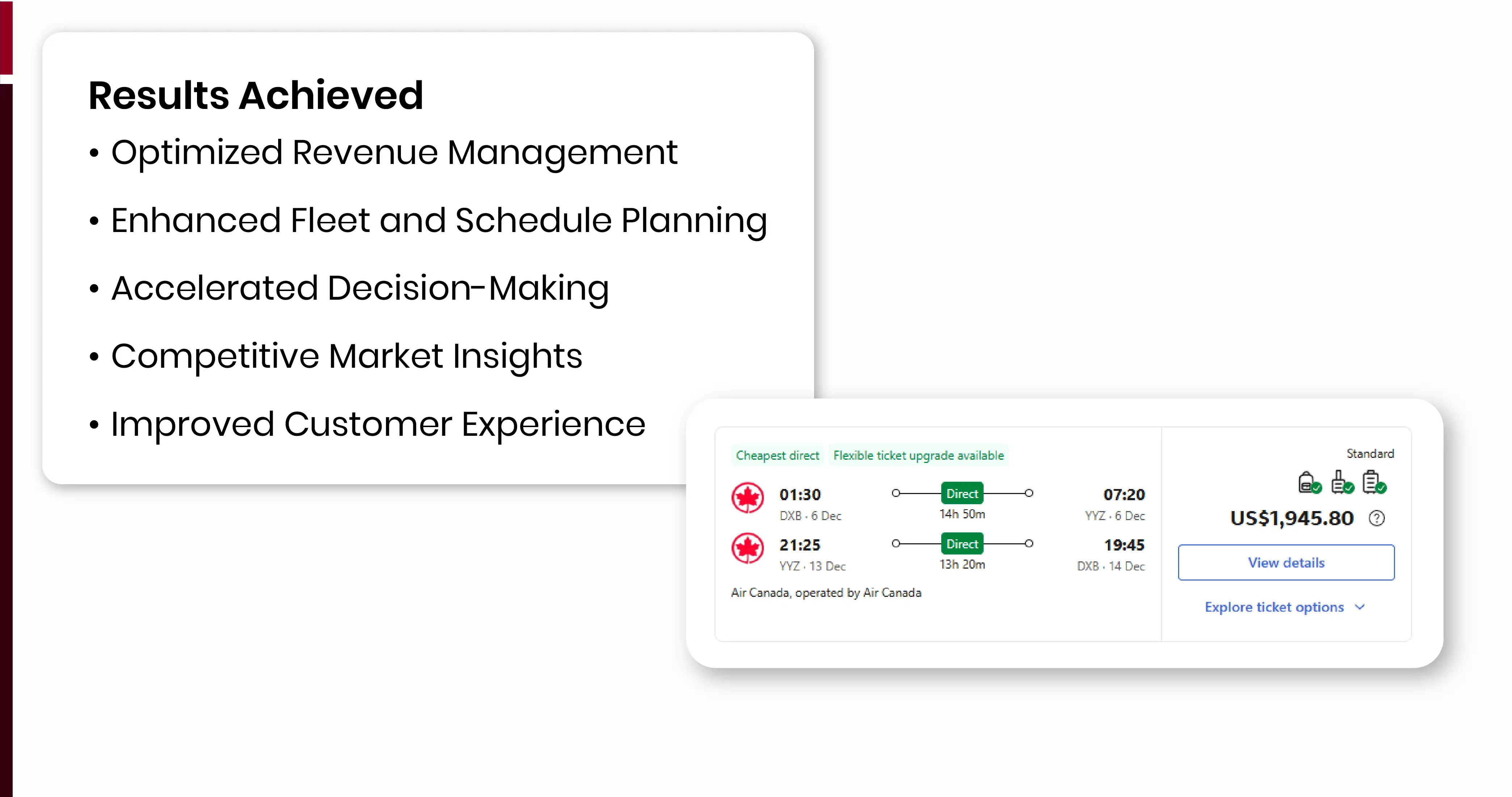
The project delivered measurable improvements in operational efficiency, revenue performance, and decision-making, transforming how the client managed flights and fares.
- Optimized Revenue Management: Access to structured, timely flight data enabled the client to adjust pricing dynamically, reducing revenue leakage, improving load factor, and maximizing profits by implementing data-driven strategies across multiple routes and travel classes.
- Enhanced Fleet and Schedule Planning: Real-time visibility into seat availability and route performance improved fleet allocation efficiency. The client reduced idle aircraft time and optimized flight schedules, ensuring higher operational productivity and customer satisfaction.
- Accelerated Decision-Making: Centralized dashboards and automated data pipelines replaced manual reporting. Leadership could make informed decisions faster, respond to market fluctuations promptly, and implement changes without delays, significantly improving strategic agility.
- Competitive Market Insights: Consolidated data allowed benchmarking against other airlines and market trends. The client could identify opportunities for fare adjustments, route optimization, and targeted promotions to strengthen competitive positioning.
- Improved Customer Experience: Better understanding of demand patterns and scheduling enabled personalized offers, improved availability management, and accurate fare recommendations, enhancing booking experience, increasing customer satisfaction, and boosting repeat business.
Sample Air India Flight Data Table
| Flight No | Route | Departure Time | Arrival Time | Fare (₹) | Seat Availability | Day of Week | Duration (hrs) |
|---|---|---|---|---|---|---|---|
| AI101 | Delhi → Mumbai | 06:00 AM | 08:00 AM | 5,200 | 42 | Monday | 2 |
| AI203 | Bengaluru → Delhi | 09:30 AM | 12:00 PM | 6,150 | 35 | Wednesday | 2.5 |
| AI305 | Mumbai → Hyderabad | 02:15 PM | 03:45 PM | 4,800 | 50 | Friday | 1.5 |
| AI407 | Kolkata → Delhi | 05:00 PM | 07:30 PM | 5,900 | 28 | Saturday | 2.5 |
| AI509 | Delhi → Bengaluru | 08:00 PM | 10:30 PM | 6,400 | 40 | Sunday | 2.5 |
Client’s Testimonial
"Before partnering with this team, we struggled to access accurate flight schedules and fare trends efficiently. Their automated data scraping solution transformed our operations, providing real-time visibility into pricing, seat availability, and route performance. With structured datasets and interactive dashboards, we can make informed pricing decisions, optimize scheduling, and respond to market changes swiftly. The results were immediately noticeable in improved revenue management, fleet utilization, and customer satisfaction. Their expertise, responsiveness, and deep understanding of airline data needs exceeded expectations, making them a critical partner in our business intelligence strategy."
Conclusion
This project demonstrates the transformative impact of structured, real-time airline data on operational efficiency and strategic decision-making. By automating flight schedule and fare collection, the client gained actionable insights into route performance, seat availability, and pricing trends. The availability of centralized dashboards and predictive analytics enabled faster decision-making, optimized fleet utilization, and improved revenue management. Additionally, understanding demand patterns allowed for targeted pricing strategies and enhanced customer satisfaction. The engagement highlights the value of leveraging technology to convert fragmented data into meaningful insights. With the implementation of Flight Price Data Intelligence, travel companies can now make proactive, informed decisions, maintain competitive advantage, and deliver superior booking experiences across multiple markets.
FAQs
Unlock the Full Report
Enter your details to access premium pricing intelligence insights