How Can Quietcations & Hushpitality Scraping Reveal Emerging Niche Travel Demand Signals Before They Go Mainstream?
Introduction
Travel is changing. For many travelers, the goal is no longer to fill every hour with sightseeing, nightlife, and crowded attractions. Instead, travelers are increasingly searching for peaceful hotels, secluded destinations, digital detox experiences, wellness retreats, nature stays, and low-stimulation vacations.
This shift is creating a valuable opportunity for hotels, travel agencies, OTAs, destination marketers, and hospitality investors to understand the emerging demand for quiet and restorative travel. Quietcations & Hushpitality Scraping can help businesses collect structured information about hotels, room rates, amenities, locations, reviews, experiences, availability, and booking patterns associated with this evolving segment.
At the same time, Hotel Data Intelligence enables hospitality businesses to transform scattered accommodation information into actionable insights about pricing, demand, customer preferences, and competitive positioning.
The growth of emerging travel trends data scraping is also helping businesses identify niche travel movements before they become mainstream. By monitoring hotel websites, OTAs, travel marketplaces, review platforms, destination pages, and hospitality listings, organizations can build a continuously updated picture of where travelers want to stay and what experiences they value.
What Are Quietcations and Hushpitality?
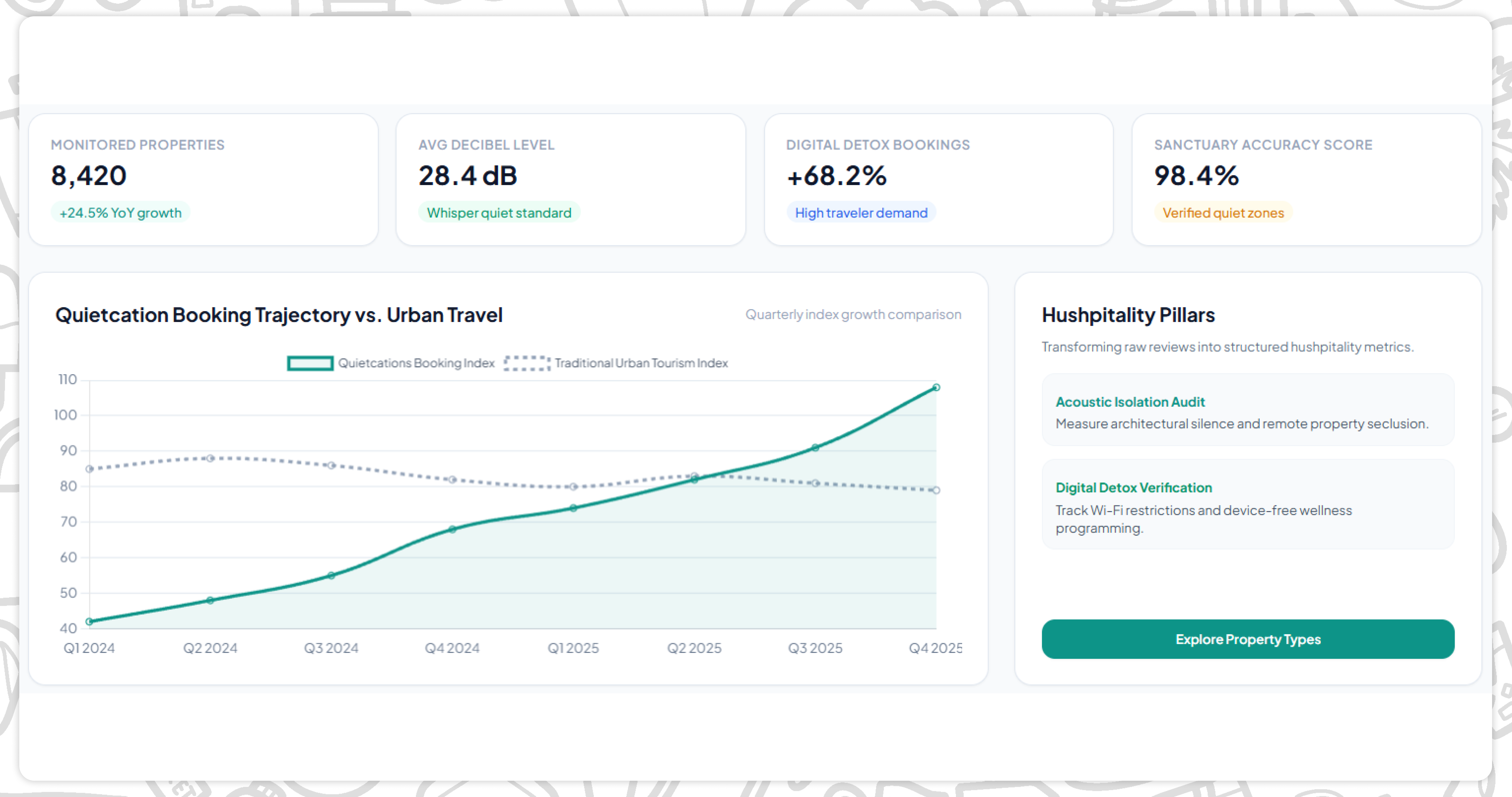
Quietcations refer to vacations designed around peace, relaxation, privacy, slower schedules, and reduced stimulation. Instead of maximizing the number of attractions visited, travelers may prioritize reading, sleeping, meditation, wellness, nature walks, spa treatments, or simply spending time away from busy urban environments.
Hushpitality expands this concept into hospitality. Hotels and resorts can position themselves around silence, privacy, tranquility, minimal crowds, personalized service, secluded accommodation, and restorative experiences.
Examples can include:
- Remote mountain lodges
- Forest retreats
- Private villas
- Wellness resorts
- Adults-only properties
- Digital detox hotels
- Countryside cottages
- Beachside retreats
- Meditation centers
- Spa resorts
- Boutique properties offering private experiences
For businesses, the challenge is identifying which properties genuinely serve this demand and how travelers respond to their offerings.
This is where structured travel data collection becomes valuable.
Why Quiet Travel Is Becoming an Important Hospitality Segment?
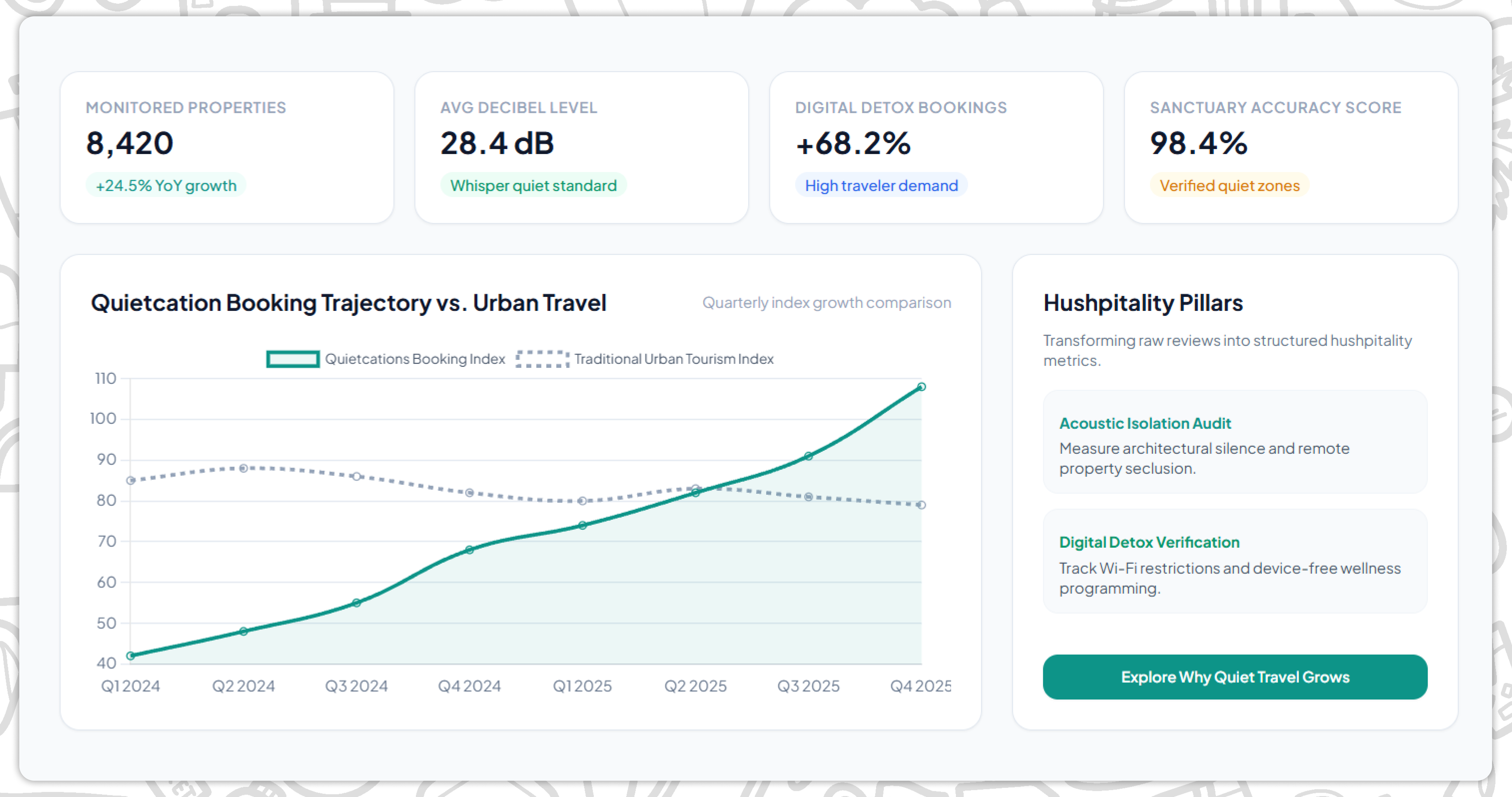
Travelers are becoming more selective about how they spend their leisure time. Long working hours, connected devices, urban congestion, and increasingly busy lifestyles can create demand for destinations that offer an opportunity to disconnect.
Quiet travel does not necessarily mean luxury travel. A traveler might choose an inexpensive countryside guesthouse because it offers privacy and nature, while another may select a premium wellness resort.
Therefore, businesses need to analyze multiple dimensions rather than simply tracking hotel prices.
Travel Data Intelligence can combine accommodation information, reviews, amenities, destinations, prices, availability, and traveler preferences to reveal patterns within this niche.
For example, businesses can examine whether demand for quiet properties is increasing during specific months, whether travelers prefer particular destinations, and whether wellness amenities influence booking behavior.
What Data Can Be Scraped From Quietcation Hotels?
A comprehensive scraping strategy can capture many attributes associated with quiet and restorative accommodations.
Property Information
Businesses can collect hotel names, addresses, geographic coordinates, property categories, descriptions, room types, star classifications, and accommodation styles.
This information helps identify properties positioned around tranquility, privacy, nature, wellness, or secluded experiences.
Pricing Information
Hotel pricing is particularly important because quietcation properties may experience substantial seasonal variation.
Collected data can include room rates, weekend prices, weekday prices, seasonal prices, discounts, promotional offers, taxes, fees, and package pricing.
Monitoring this information over time helps businesses understand how properties adjust their rates as demand changes.
Amenities and Experiences
Quietcation travelers may evaluate hotels differently from conventional leisure travelers.
Relevant data can include:
- Spa facilities
- Yoga sessions
- Meditation rooms
- Private gardens
- Nature trails
- Pools
- Private balconies
- Ocean views
- Forest views
- Wellness programs
- Digital detox policies
- Adults-only facilities
- Private dining
- In-room wellness services
These attributes can be categorized and analyzed to identify which features frequently appear among high-demand properties.
Hushpitality Travel Demand Forecasting
Demand forecasting becomes especially useful when businesses have historical travel data.
Hushpitality Travel Demand Forecasting can analyze historical hotel prices, availability, booking signals, review activity, destination interest, and seasonal changes to estimate future demand patterns.
For instance, a resort may discover that searches and bookings for secluded properties increase during periods when travelers traditionally take wellness or nature-focused holidays.
Forecasting models can then help hospitality businesses plan inventory, pricing, promotions, staffing, and marketing campaigns.
The objective is not simply to predict how many rooms might be sold. It is also to understand what type of experience travelers are likely to seek.
Hushpitality & Quietcations Travel Trend Analysis
Travel trends can emerge gradually.
A few boutique hotels may initially introduce digital detox packages, private wellness programs, or silent retreats. If travelers respond positively, similar experiences can begin appearing across destinations.
Hushpitality & Quietcations Travel Trend Analysis allows businesses to monitor these developments across accommodation listings and travel platforms.
Businesses can track:
- Growth in quiet-focused properties
- New wellness packages
- Changes in hotel descriptions
- Emerging destination clusters
- Increasing mentions of privacy
- Digital detox offerings
- Nature-based experiences
- Changes in customer reviews
- Seasonal demand patterns
- New accommodation concepts
Such analysis can reveal how hospitality providers are adapting to changing traveler expectations.
Understanding Quietcation Hotel Pricing
Price intelligence is another major application.
A quiet retreat may command a premium because of its location, privacy, limited inventory, wellness facilities, or personalized experiences.
However, pricing can vary substantially depending on season, room category, destination, availability, and booking window.
Quietcation Hotel Pricing Trends analytics helps businesses compare these fluctuations across properties and destinations.
Hotels can monitor competitor pricing and identify opportunities to adjust their own rates. Travel agencies can identify destinations where quiet experiences are competitively priced. Investors can assess whether particular markets are developing stronger pricing power.
Monitoring Hushpitality Experiences
Traditional hotel intelligence often focuses on rooms, prices, ratings, and availability.
Hushpitality requires a broader perspective.
Hushpitality hotel experiences and travel trends monitoring can capture the experiential elements that differentiate one property from another.
For example, two hotels may have similar room prices and ratings. However, one may offer forest bathing, guided meditation, private terraces, spa treatments, and digital detox packages.
Experience-level data can therefore provide a more detailed understanding of the competitive landscape.
Using Reviews to Understand Traveler Expectations
Reviews are one of the richest sources of qualitative travel intelligence.
Travelers frequently describe whether a property feels peaceful, private, crowded, relaxing, noisy, secluded, romantic, restorative, or connected to nature.
Natural-language processing can categorize these comments into themes.
Businesses can analyze recurring expressions associated with:
- Silence
- Privacy
- Sleep quality
- Crowds
- Noise
- Nature
- Wellness
- Staff service
- Room comfort
- Location
- Digital detox
- Relaxation
This makes it possible to understand not only what hotels advertise but also how guests actually experience them.
Booking Trend Insights for Hospitality Businesses
Booking Trend Insights can help organizations understand when travelers reserve quiet properties, how far ahead they book, which room types they select, and which destinations receive recurring demand.
These insights can support several business decisions.
Hotels can optimize pricing and inventory.
Travel agencies can create targeted quiet-travel packages.
OTAs can improve recommendation engines.
Destination marketers can identify emerging wellness and retreat destinations.
Investors can evaluate market expansion opportunities.
Travel technology companies can build specialized products around emerging traveler preferences.
Building a Quietcation Market Intelligence System
A scalable data pipeline can collect information from multiple sources at regular intervals.
The workflow can include source discovery, automated extraction, data cleaning, entity matching, categorization, sentiment analysis, historical storage, and dashboard development.
Hotels can then be segmented according to attributes such as:
- Location
- Price range
- Accommodation type
- Wellness facilities
- Privacy level
- Nature access
- Guest sentiment
- Rating
- Seasonal availability
- Experience categories
Over time, Quietcations & Hushpitality Market Intelligence creates a specialized dataset for monitoring the development of quiet and restorative travel.
Why Real-Time Monitoring Matters
Hospitality markets change quickly.
A hotel may introduce a new package, increase prices, become unavailable, add wellness services, or change its positioning within a short period.
Periodic research can miss these developments.
Automated scraping allows businesses to monitor relevant sources continuously and capture changes as they occur.
This makes travel intelligence more responsive and supports faster commercial decisions.
How Travel Scrape Can Help You?
Specialized Quietcation Data
Travel Scrape can collect hotel, pricing, availability, amenities, reviews, and experience data to create structured datasets focused on quiet and restorative travel.
Competitive Pricing Monitoring
Track competitor hotel rates, room categories, discounts, packages, and seasonal changes to identify pricing movements across destinations and accommodation segments.
Experience Intelligence
Extract wellness facilities, privacy features, nature experiences, digital detox programs, spa offerings, and other attributes that define emerging hushpitality concepts.
Trend and Demand Analysis
Combine historical accommodation and travel data to identify destination growth, seasonal patterns, booking behavior, and emerging traveler preferences within quietcation markets.
Custom Travel Intelligence
Travel Scrape can deliver cleaned datasets, APIs, dashboards, and customized intelligence solutions that support hospitality strategy, market research, revenue management, and investment analysis.
Conclusion
Quietcations and hushpitality represent an evolving direction in travel, centered on privacy, tranquility, wellness, nature, and slower experiences. As travelers increasingly evaluate accommodation based on how an experience makes them feel rather than simply where they can stay, hospitality businesses need more detailed market intelligence.
Scraping hotel listings, pricing, amenities, availability, reviews, experiences, and booking signals can create a powerful foundation for understanding this emerging segment.
With continuous data collection and structured Seasonal Trend Analysis, businesses can monitor competitive positioning, identify changing traveler preferences, evaluate pricing patterns, forecast demand, and discover new opportunities within quiet and restorative travel.
The future of hospitality may not always be about offering travelers more things to do. Increasingly, it may be about helping them find places where they can do less—and recover more.
Ready to elevate your travel business with cutting-edge data insights? Scrape Aggregated Flight Fares to identify competitive rates and optimize your revenue strategies efficiently. Discover emerging opportunities with tools to Extract Travel Website Data, leveraging comprehensive data to forecast market shifts and enhance your service offerings. Real-Time Travel App Data Scraping Services helps stay ahead of competitors, gaining instant insights into bookings, promotions, and customer behavior across multiple platforms. Get in touch with Travel Scrape today to explore how our end-to-end data solutions can uncover new revenue streams, enhance your offerings, and strengthen your competitive edge in the travel market.
Unlock the Full Report
Enter your details to access premium pricing intelligence insights